

Vibe Coding Isn’t a Shortcut. It’s the New Entry Point.
What enterprise AI training taught me about fundamentals, best practices, and building responsibly with LLMs

Good morning!
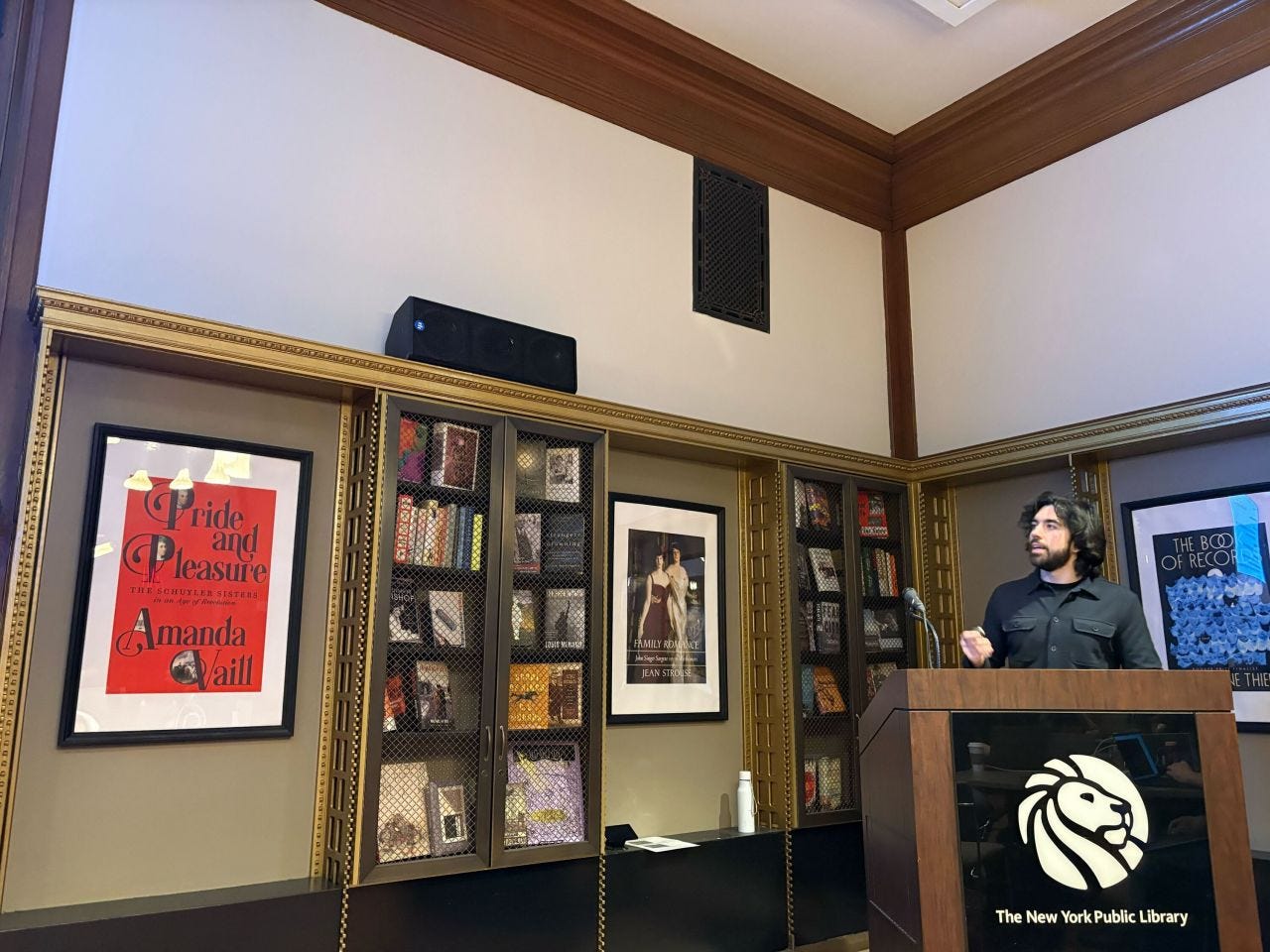
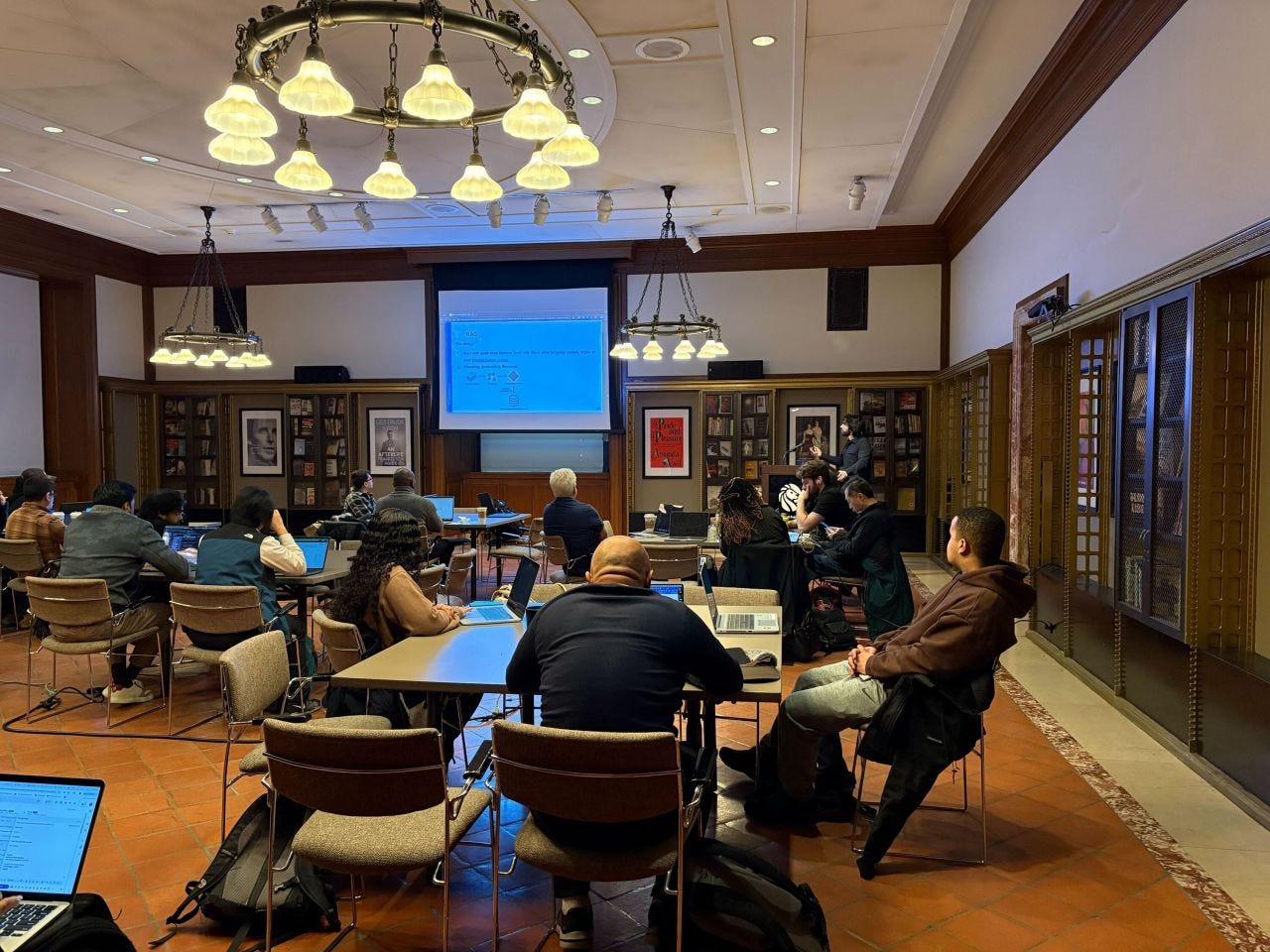
Two weeks ago, we (Towards AI) had the opportunity to give a training to the New York Public Library (NYPL) and their (surprisingly) 35 developers!
I went into this training expecting to teach AI engineering.
I came out realizing that what people actually want to learn has shifted more than I thought in the past year.
We ran a multi-day AI training with a very mixed audience: developers, IT folks, managers, people using different programming languages, different stacks, different levels of comfort with coding.
Some of them didn’t even have Python installed.
And yet, by the end of the week, many of them were building things I would not have expected a year ago…
In this iteration, I want to share some learnings, and most importantly, the shift I didn’t fully anticipate.
But first, a word from today’s sponsor... Genstore!
1️⃣ (sponsor) Launch your AI‑powered store today with Genstore AI!
Tired of juggling countless tools, manual tasks, and burnout as a builder/entrepreneur?
Genstore—the first full‑stack AI agent team—turns your story into a live store in minutes, then runs it 24/7 so you don’t have to do everything alone.
With millions of product choices, ready‑to‑use templates, and specialized AI agents handling marketing, setup, products, support, and analytics, it’s built for real people who want to focus on growth, not operations.
Genstore lets you work on your business, not just in it.
Launch your AI‑powered store today.
2️⃣ The shift I didn’t fully anticipate
For years, the pattern was clear: developers wanted to “become AI engineers”.
Learn Python. Learn techniques in notebooks. Learn RAG, fine-tuning, evals, agents. Build in real repositories, real projects.
That desire is still there, but something new is now sitting in front of it.
People want to build first. And build real things.
Not after weeks of setup. Not after mastering every abstraction. But now.
When we introduced vibe coding and cloud-based coding workflows (in their case, via the Gemini CLI), something clicked immediately.
Even people with:
little Python experience
backgrounds in other languages
or non-technical roles
were suddenly able to move and interact with us.
In one session, we showed (live) how to build a system that:
takes any video link
scrapes the content
translates it to English
summarizes it
extracts actionable insights
and exposes everything through a simple frontend + backend
All connected. All running locally.
We even implemented ollama and local models.
All in one morning.
As a demo, it took a few hours because we were:
installing environments
debugging live
explaining what was happening
On our own, this is something we could prototype in about an hour.
That gap is the interesting part.
People don’t reject theory. They reject theory they can’t act on.
This was one of the biggest takeaways for me.
Participants were genuinely interested in:
how language models work
why they hallucinate
why they fail
when not to use them
We had great discussions around fundamentals.
But when it came to more technical concepts like RAG, evaluations, or workflows, interest spiked only when people felt they could implement them themselves.
Vibe coding changed the equation.
Once people realized they could:
ask the model to help them debug
scaffold code
explain unfamiliar patterns
iterate quickly
implement RAG and proper prompting practices in files like the claude.md direction file
They were suddenly much more willing to dive into “advanced” AI engineering topics.
But, unfortunately, in this training, we introduced vibe coding late, as a live demo near the end (last day out of 4 training days).
In hindsight, that was backwards.
The better flow would have been:
Fundamentals: how LLMs work, why they fail, what they’re good at
How to vibe code properly (tools, workflows, best practices)
Then notebooks and coding: RAG, evals, agents, systems design
If people learn how to code with AI early, even as non-Python programmers, they can then use those skills to:
explore notebooks on their own
debug on their own
understand abstractions faster
and practice much more independently
Vibe coding is not a shortcut around learning. It’s a multiplier for it. But it needs to be done right.
Anyone can prompt a model and get a working prototype calling APIs and using LLMs.
Very few people truly understand:
why a model is making a mistake
when not to use an LLM at all
when plain data or rules are better
when to use RAG, tools, or nothing
how to structure systems to reduce risk in production
That’s where experienced AI engineers still provide massive value.
Not by gatekeeping complexity, but by teaching:
good prompting habits
correct mental models
realistic expectations
and safe, scalable patterns
Vibe coding without fundamentals leads to fragile systems. Fundamentals without vibe coding slow people down unnecessarily. Especially when learning a new skill, like AI engineering.
The future is clearly both.
Learning AI engineering without vibe coding today feels like practicing climbing using only one hand. It’s unnecessarily making things harder for yourself, which has benefits, especially for learning (or developing good technique in climbing’s case), but it’s not the only way to learn.
But learning vibe coding without understanding how models actually work is just as dangerous.
The sweet spot is teaching both, together, early.
If you’re thinking about running AI training inside your company and want to do it the right way, you can just reply to this email.
I’m also taking all of these lessons and applying them directly to how we design future trainings.
More to come...
And that’s it for this iteration! I’m incredibly grateful that the What’s AI newsletter is now read by over 30,000 incredible human beings. Click here to share this iteration with a friend if you learned something new!
Looking for more cool AI stuff? 👇
Looking for AI news, code, learning resources, papers, memes, and more? Follow our weekly newsletter at Towards AI!
Looking to connect with other AI enthusiasts? Join the Discord community: Learn AI Together!
Want to share a product, event or course with my AI community? Reply directly to this email, or visit my Passionfroot profile to see my offers.
Thank you for reading, and I wish you a fantastic week! Be sure to have enough sleep and physical activities next week!
Louis-François Bouchard